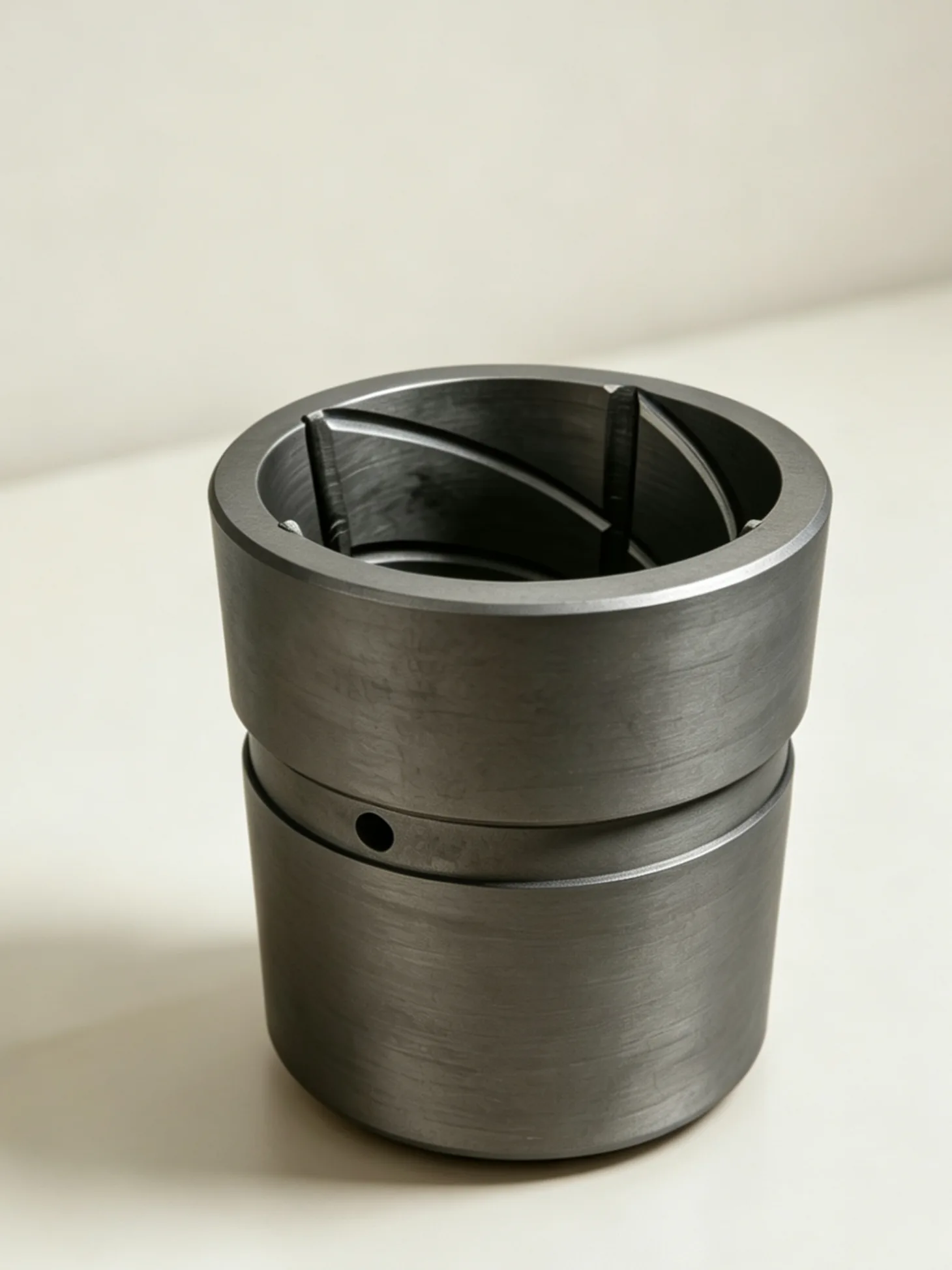
A bushing is a thin-wall sleeve that carries radial load and guides a rotating shaft. Carbon graphite bushings earn their place because they need no external oil supply: the layered graphite structure deposits a transfer film on the shaft at a friction coefficient of 0.04-0.15 while conducting friction heat away at 8-70 W/m·K. That is why submersible pumps, sewage pumps, chemical pumps and submerged equipment — positions where oil cannot be fed, or would contaminate the product — normally replace bronze with carbon graphite.
| Temperature | -50°C ~ 300°C · 350°C with anti-oxidation impregnation |
| Pressure | ≤ 15 MPa |
| Surface speed | ≤ 20 m/s |
| Coefficient of friction | 0.04 – 0.15 (dry) |
| Recommended PV | 0.8 – 1.2 MPa·m/s (phenolic impregnated) |
| Media | Fresh water, sewage, seawater, oils, weak acids/alkalis, organic solvents |
| Shaft counterface | 304/316 stainless polished to Ra 0.2 µm recommended |
| Clearance | Dry-running duty typically 2.5 – 3‰ of shaft diameter |
No external lubrication system — a transfer film forms under dry running or boundary lubrication, which is what submersible and submerged equipment need
The pumped medium stays free of oil contamination, meeting cleanliness requirements in food, pharma and electronics processes
Resists seawater and weak acid/alkali attack; the galvanic corrosion and coating loss common to bronze bushes in seawater pumps do not occur
Low thermal expansion and good dimensional stability, with friction heat removed at 8-70 W/m·K, so hot spots and shaft seizure are unlikely
High length-to-diameter ratios, thin walls, steps, grooves and spiral grooves available to drawing; machining before or after impregnation can be specified to control pore closure
Shaft support sleeves for submersible and sewage pumps, at positions lubricated by the pumped water itself
Guide bushings for chemical and process pumps, replacing bronze bushes eaten by the medium
Bushes for hydraulic equipment and valve stems
Intermediate bearing sleeves for reactor agitators
Oil-free self-lubricating bushings for food and pharmaceutical equipment
Self-lubricating carbon graphite bushing, high-temp & corrosion resistant for pumps and underwater equipment.
View details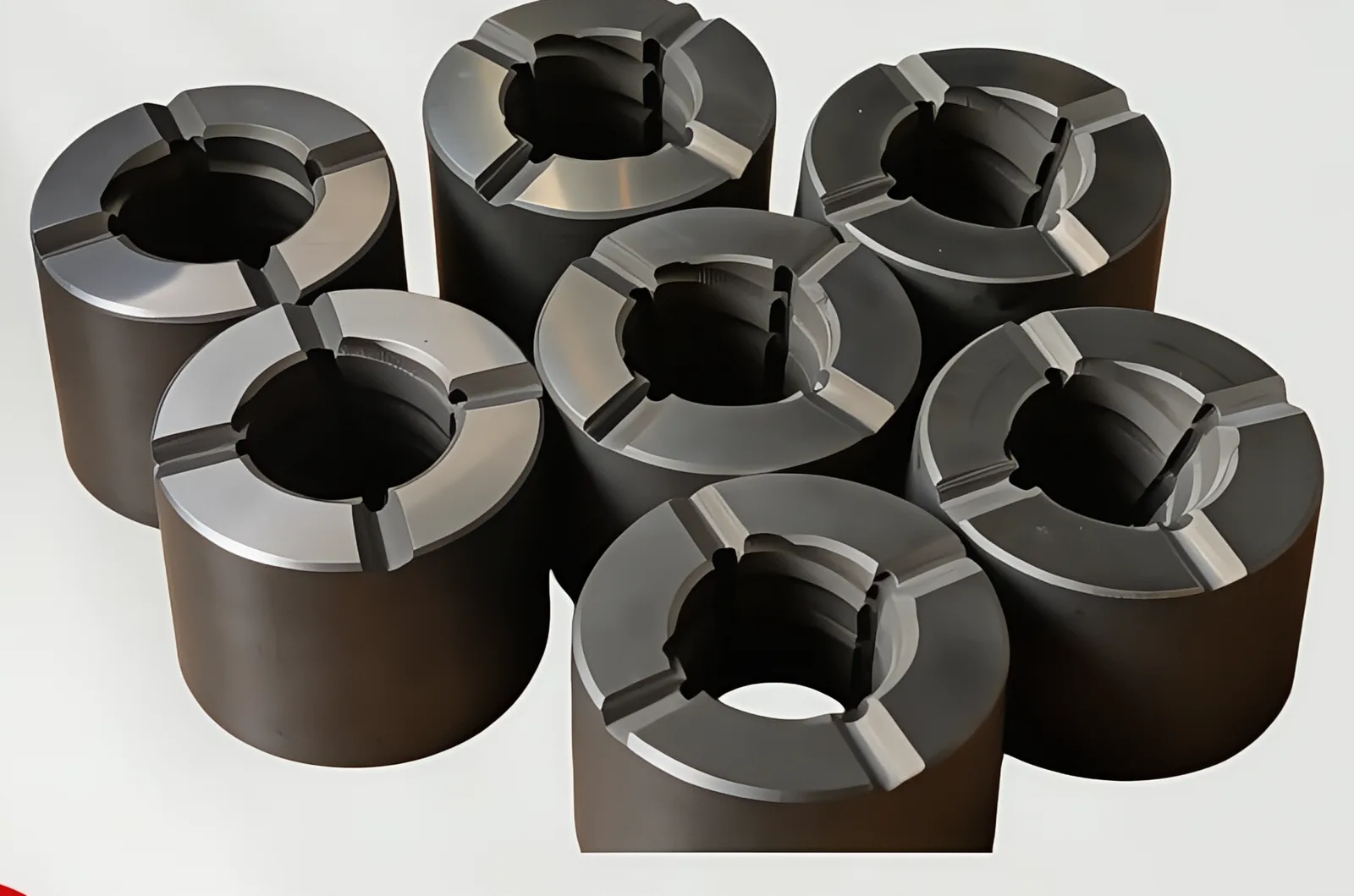
High-strength self-lubricating graphite bearing for heavy-load rotating equipment.
View details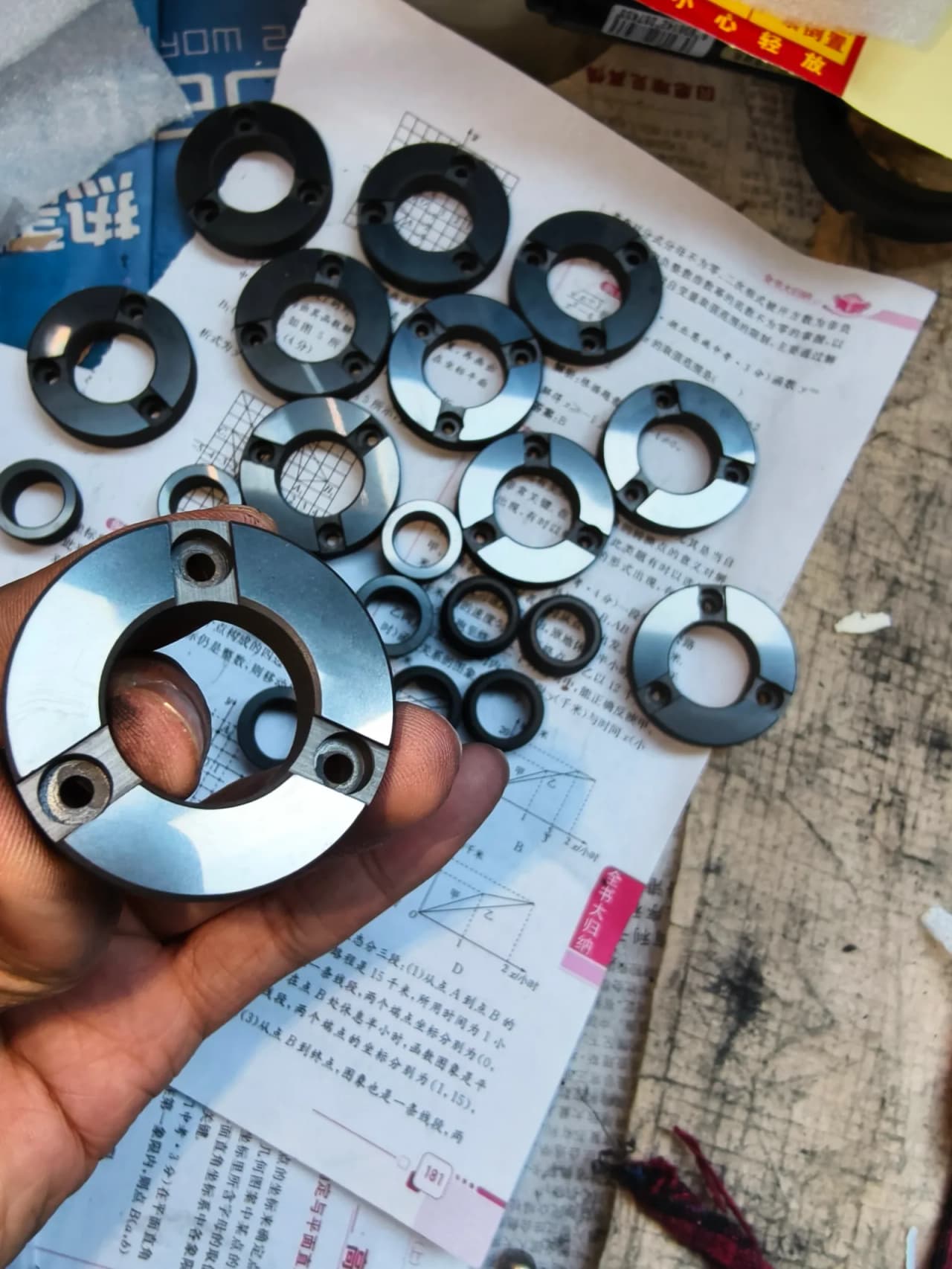
Wear-resistant self-lubricating graphite thrust disc for axial load-bearing.
View details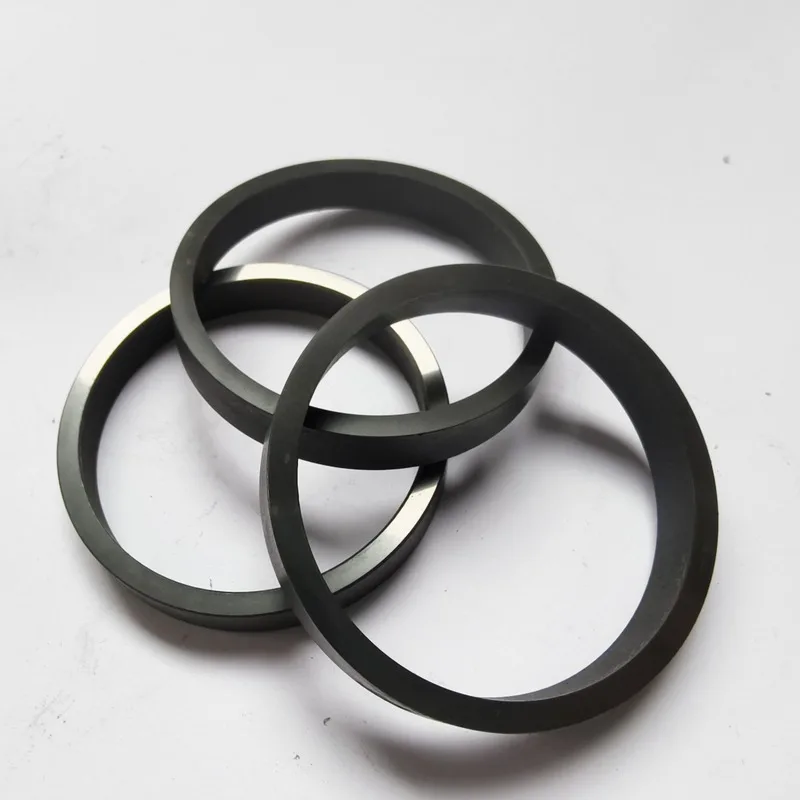
General-purpose carbon graphite seal ring for clean fluid centrifugal pumps.
View details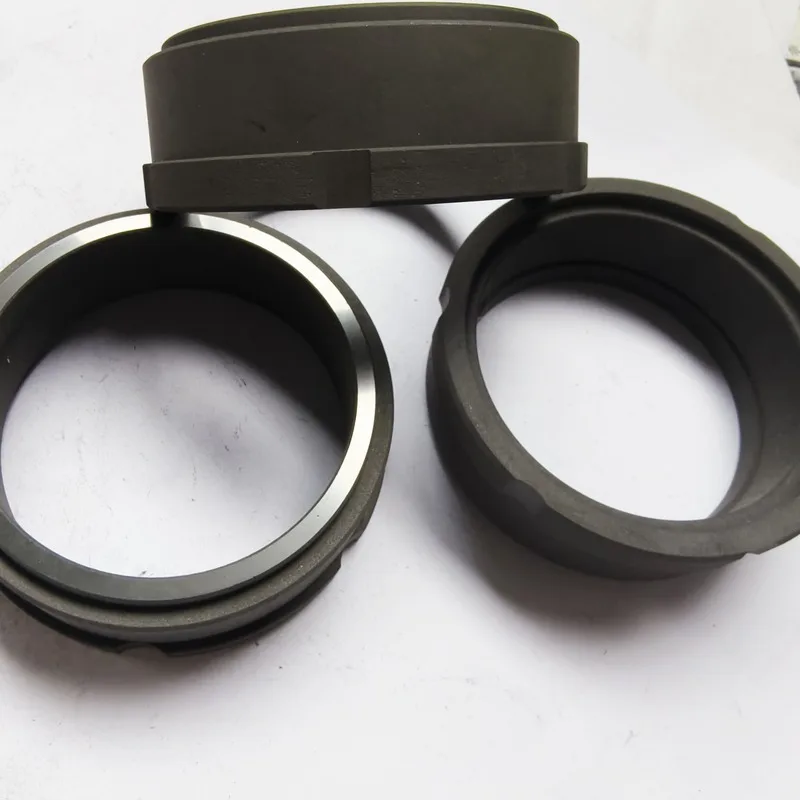
Balanced carbon graphite seal ring for medium-high pressure.
View detailsNo. Carbon graphite is a solid lubricant — weak van der Waals bonding between layers lets them slide and deposit a transfer film on the shaft, dropping friction to 0.04-0.15. That is exactly why it is used in submersible and submerged equipment. Where the pumped fluid is compatible, it also cools the bearing and extends life further.
A bushing is a thin-wall sleeve that guides the shaft under moderate radial load in a short axial envelope. Graphite bearings (GB series) have thicker walls and higher load ratings — radial pressure up to 20 MPa — for heavy-duty and impact rotation. Choose by radial load and available space: high load or shock means a bearing; space-limited guiding means a bushing. Vertical equipment additionally needs a graphite thrust disc at the shaft end to take axial load.
Usually yes, but the clearance has to be recalculated. Carbon graphite expands less than bronze and dry friction needs a wider gap to shed heat, so dry-running duty typically takes 2.5-3‰ of shaft diameter as single-side clearance (roughly 0.08 mm on a 30 mm shaft). The shaft counterface should be 304/316 stainless polished to about Ra 0.2 µm — a rough shaft will abrade the graphite. Send us shaft diameter, speed, media and temperature and we re-select the grade and issue a drawing.
Yes — it is a primary failure mode. Above 50 mg/L solids the clearance becomes a three-body abrasive wear zone and bushing life falls 60-80%; in high-sand river water transfer, measured graphite bushing life was only about 1800 hours. Adding a 50 µm magnetic filter to remove ferromagnetic particles restored life to over 85% of the original value, around 5100 hours. Where solids cannot be excluded, choose a harder antimony-impregnated grade and groove the bushing straight or helically to flush particles out.
Send shaft diameter, speed, temperature, pressure and media — engineers reply with grade selection and quotation within 24 hours.