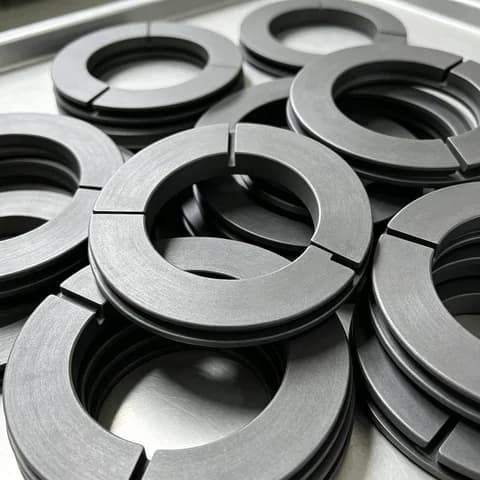
A one-piece carbon graphite ring has to slide on from the shaft end. When the seal chamber is enclosed, the shaft cannot be separated at either end, or pulling the shaft means days of downtime, that assumption breaks. A three-piece ring divides the circle into three 120° arc segments, each mating face lapped individually, so the segments assemble into a ring inside the cavity without disturbing the shaft and a single damaged segment can be swapped. Because the ground segment joints run extremely tight and carbon graphite lubricates itself, overall sealing performance matches a one-piece ring in most duties.
| Temperature | -40°C ~ 280°C · 350°C with anti-oxidation grade |
| Pressure | ≤ 10 MPa |
| Surface speed | ≤ 15 m/s |
| Segment count | 3 (standard) · 2 / 4 / 6 to drawing |
| Joint face finish | Individually lapped mating faces, minimal joint gap |
| Coefficient of friction | 0.04 – 0.15 (dry) |
| Media | Water, oils, chemicals, steam, gases |
| Impregnation options | Resin / antimony / copper / unimpregnated |
Installs inside an enclosed cavity without pulling the shaft, eliminating rotor disassembly and realignment downtime
Segment joints are lapped individually, so the assembled gap is minimal and sealing matches a one-piece ring in most duties
Damaged segments are replaced one at a time — spares are priced per segment and store far smaller than full rings
Friction coefficient 0.04-0.15 with a self-generated transfer film protects the mating face under oil-free or starved lubrication
Temperature and pressure ceilings rise with the impregnation choice, covering steam turbine and chemical plant duty
2, 4 and 6-segment layouts and non-standard geometries available to drawing for spaces the original design cannot serve
Compressor seal chambers and piston rod sealing
Centrifugal and process pump cavities where shaft-end insertion is impossible
Marine stern tube and shaft line sealing
Steam turbine and hot gas equipment seals
Segmented seals for chemical reactors and agitators
Drop-in replacements for obsolete OEM part numbers
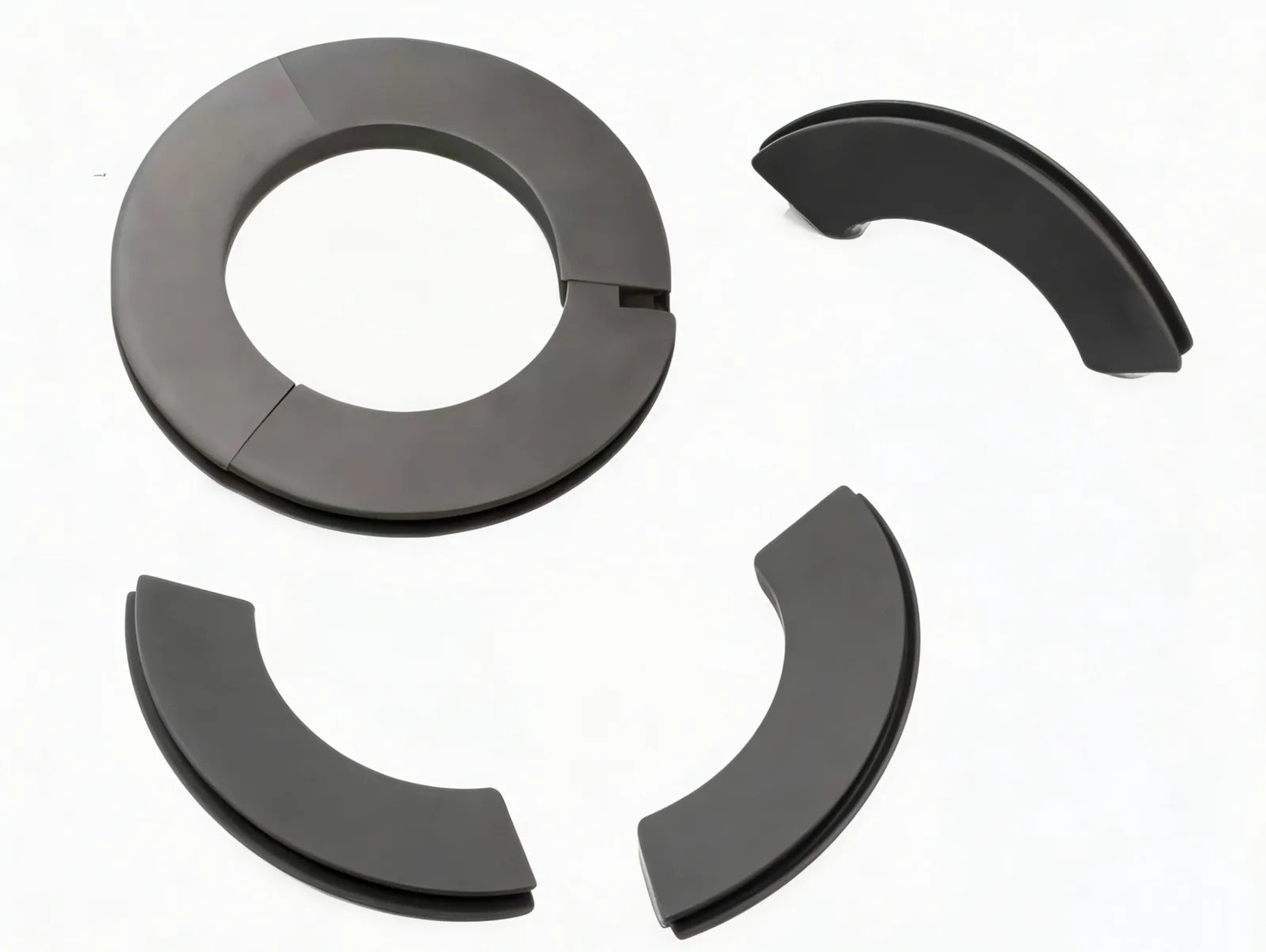
Segmented three-part carbon graphite ring for enclosed cavity installation.
View details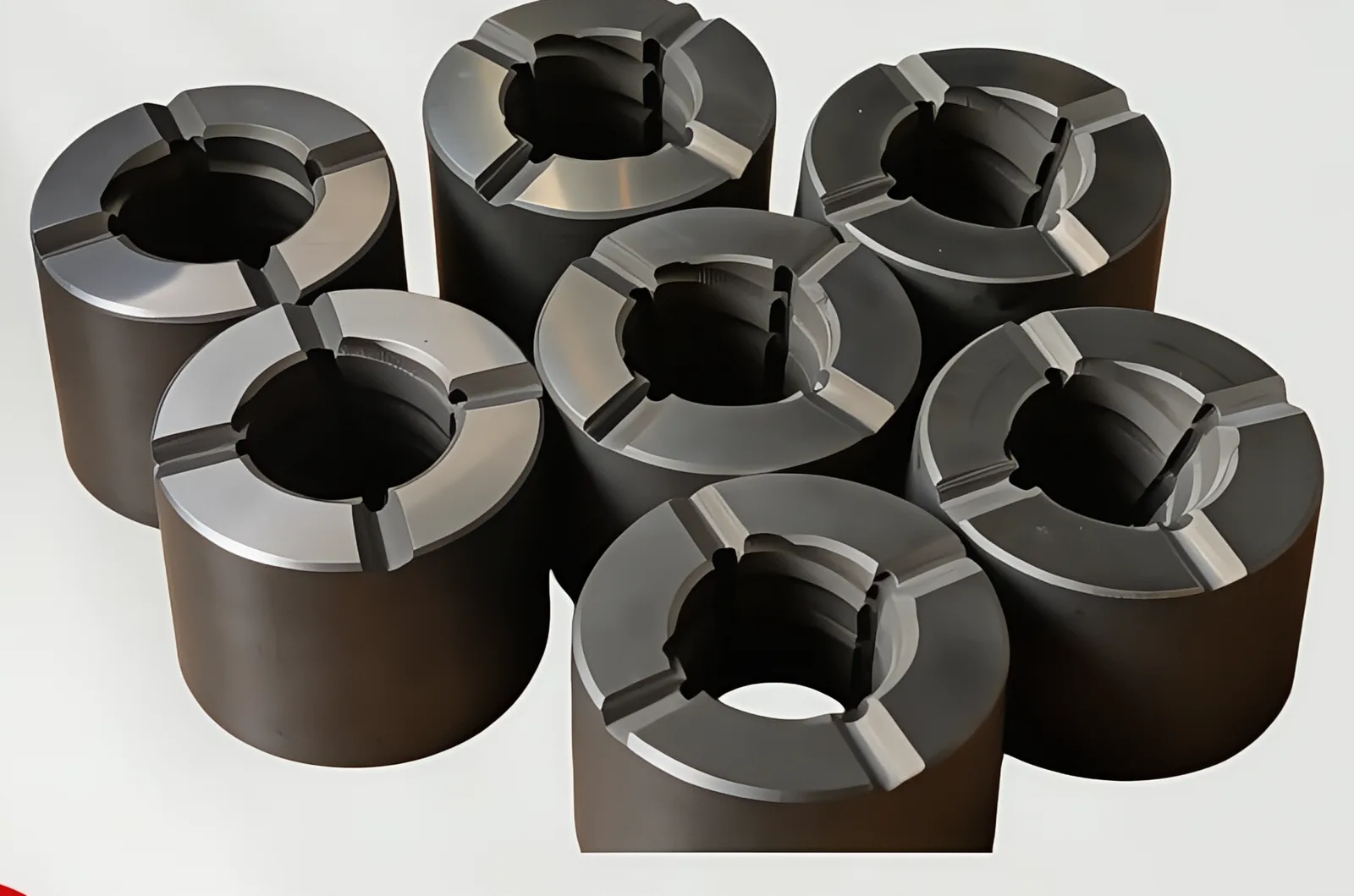
High-strength self-lubricating graphite bearing for heavy-load rotating equipment.
View details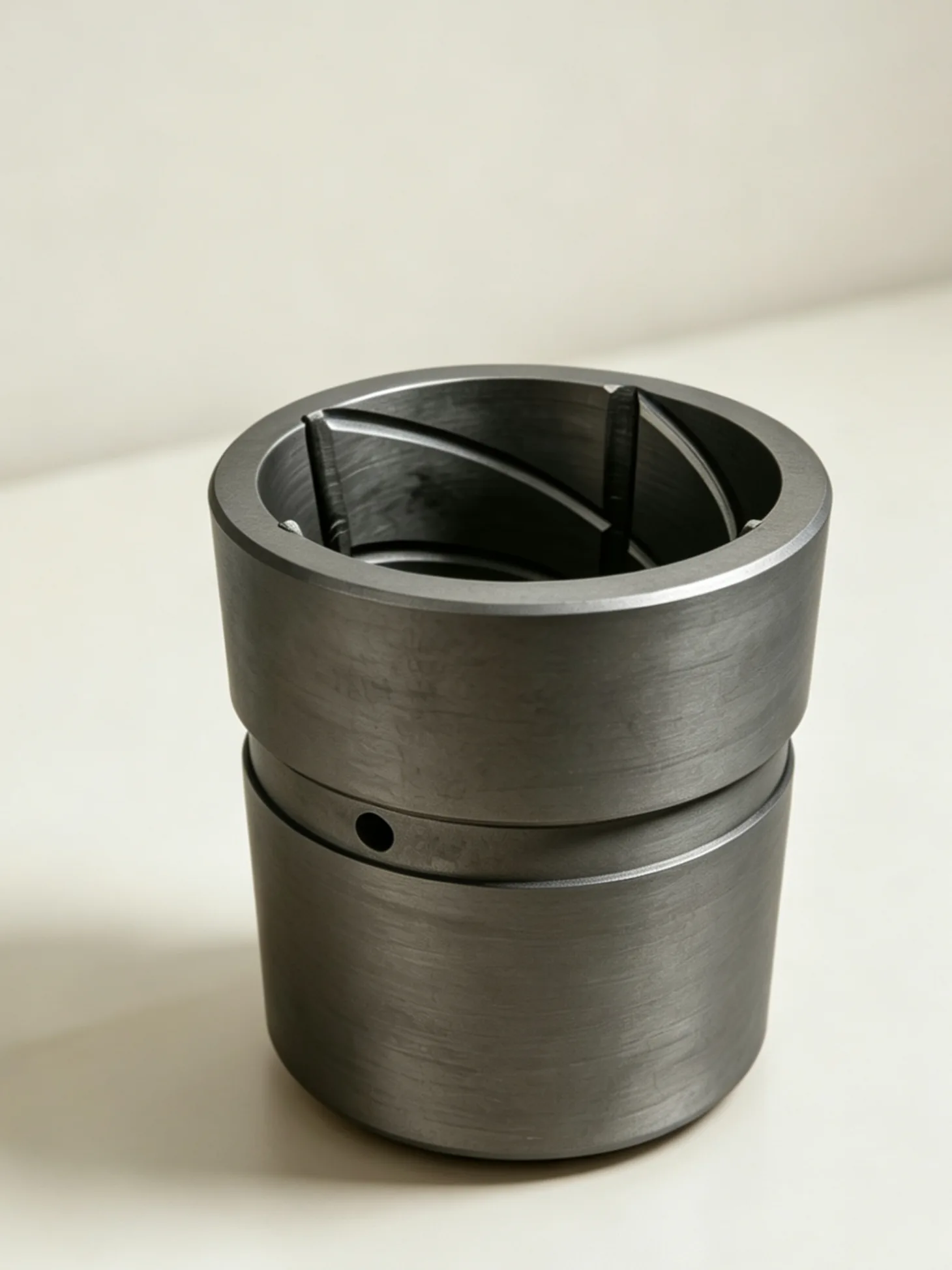
Self-lubricating carbon graphite bushing, high-temp & corrosion resistant for pumps and underwater equipment.
View details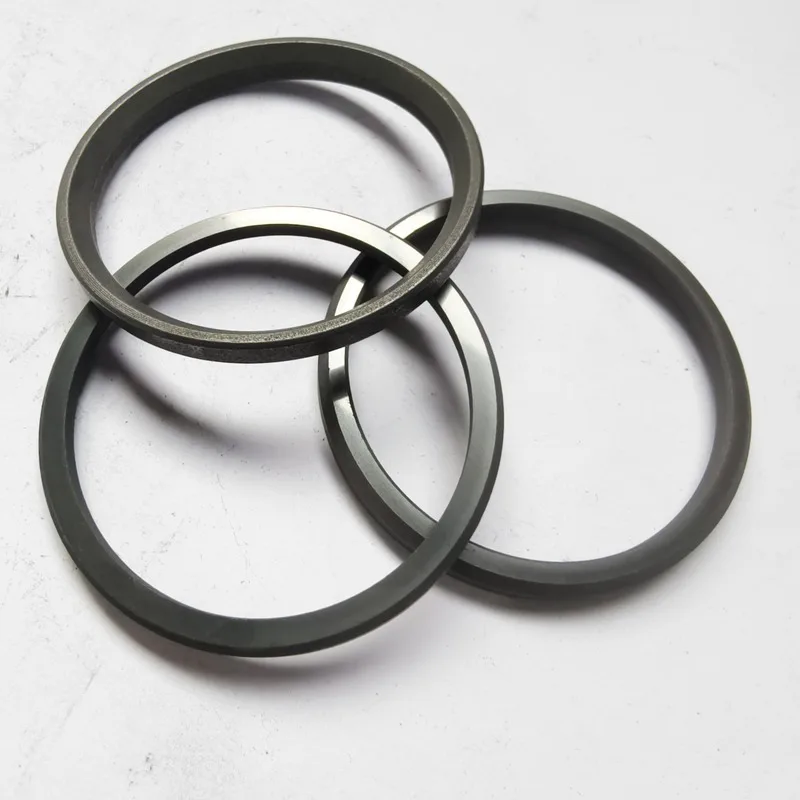
Medium-duty carbon graphite seal ring for medium-high speed conditions.
View details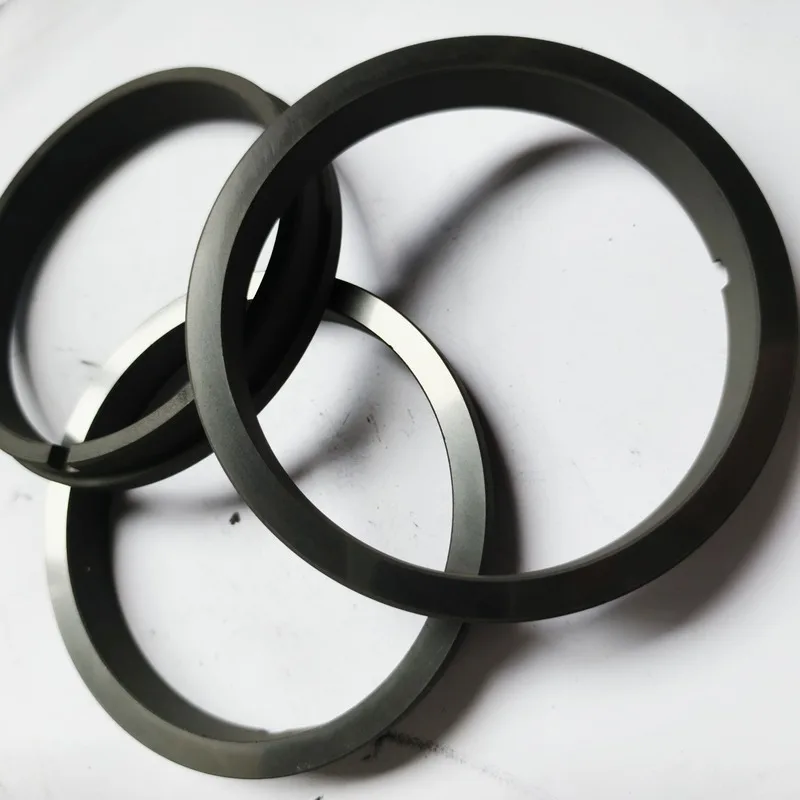
US carbon graphite seal ring, general-purpose shaft seal.
View detailsOnly the geometry differs — material, grade and impregnation are identical. A one-piece ring seals marginally better but must slide on from the shaft end, so a three-piece ring becomes the answer whenever: (1) the seal chamber is enclosed and the shaft cannot be separated at either end; (2) pulling the shaft means lifting the rotor or breaking pipework, so downtime costs far more than the part; or (3) the OEM fitted a segmented design originally. Roundness of the assembled ring is guaranteed by the lapped joint faces — we lap each segment individually, so in most duties sealing matches a one-piece ring.
Under normal running it will not reach measurable leakage. The lapped segment joints close to a minimal gap, operating pressure and radial force press the ring against the chamber wall, and carbon graphite's self-lubrication avoids stick-slip. Two things to watch: solids lodged in a joint can pry the gap open, so filter the media or specify a grooved design; and a poorly lapped joint or a chipped edge in transit gives early seepage, which is why every segment face is inspected for appearance and contact before packing.
Yes. Three segments at 120° is standard, but the segment count is a design parameter set by access: a narrow chamber opening with a large shaft calls for 4 or 6 segments to shrink the size of each passing piece, while a shallow chamber that benefits from fewer joints can use 2. Send bore, OD, height, segment count and preferred joint positions and we will also check wall thickness and strength, recommending a one-piece ring or a geometry change where that is the better answer.
Keep full rings' worth — three segments, or a whole multiple of the segment count you order. The reason is not wear probability but fit: the joint faces within one ring are lapped as a matched set, so mixing a single segment from another batch opens the joint gap and degrades roundness. To cut shelf stock, order two matched sets and label each to its cavity position rather than mixing across sets. Decide this at order time, because match-lapping happens during manufacture.
Send shaft diameter, speed, temperature, pressure and media — engineers reply with grade selection and quotation within 24 hours.