A carbon graphite seal ring is the carbon graphite member of a mechanical seal face pair, running against a harder mating ring. Huahao rings start as petroleum-coke and pitch-coke bodies that are baked, leaving 8-15% porosity, then impregnated with resin, antimony or carbonized to seal the pores according to duty, and finally lapped to drawing tolerance with flatness checked part by part. Friction coefficient 0.04-0.15 and thermal conductivity 8-70 W/m·K let the ring build a transfer film under oil-free or starved lubrication, preventing seizure and dry-run scoring.
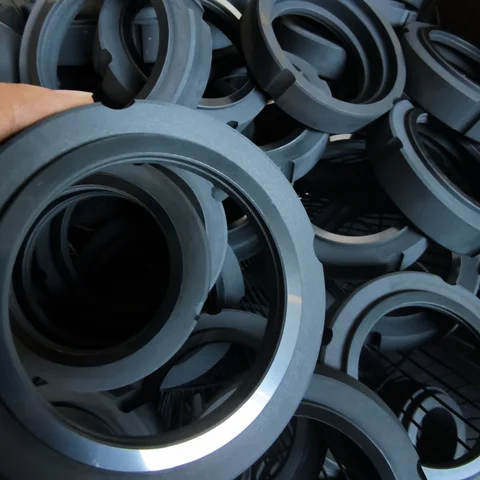
| Temperature | -40°C ~ 280°C (standard) · up to 350°C (anti-oxidation impregnation) · 500°C (antimony) · 600°C (carbonized) |
| Pressure | ≤ 0.8 – 2.0 MPa seal face duty |
| Shaft speed | ≤ 2000 – 5000 rpm depending on model |
| Coefficient of friction | 0.04 – 0.15 (dry) |
| Thermal conductivity | 8 – 70 W/m·K |
| Chemical resistance | pH 0 – 14 (grade dependent) |
| Density | 1.55 – 1.85 g/cm³ |
| Dimensional finish | CNC machined and face-lapped to drawing tolerance |
The graphite transfer film keeps the friction coefficient at 0.04-0.15, protecting the mating face from scoring during liquid loss or startup
Thermal conductivity of 8-70 W/m·K — several times metallic rings — carries friction heat away from the face and lowers thermal cracking and hot-spot risk
Impregation sets the duty boundary: phenolic resin 220°C, furan resin Tg 260-300°C, antimony 500°C, carbonized 600°C
Chemically inert to acids, alkalis, salts and solvents, suited to chemical pumps, seawater pumps and sour oil where metallic rings corrode
Each seal face is lapped and inspected, dimensions held to micron-level drawing tolerance for drop-in replacement without modifying the seal chamber
Rotating and stationary faces for centrifugal and chemical pump mechanical seals
Face seals for hot oil pumps, tower bottom pumps and sour crude transfer pumps
Seal rings and piston rings for reciprocating and screw compressors
Marine seawater pumps, stern tube seals and hydraulic equipment
High-temperature dye liquor pumps and textile machinery seals
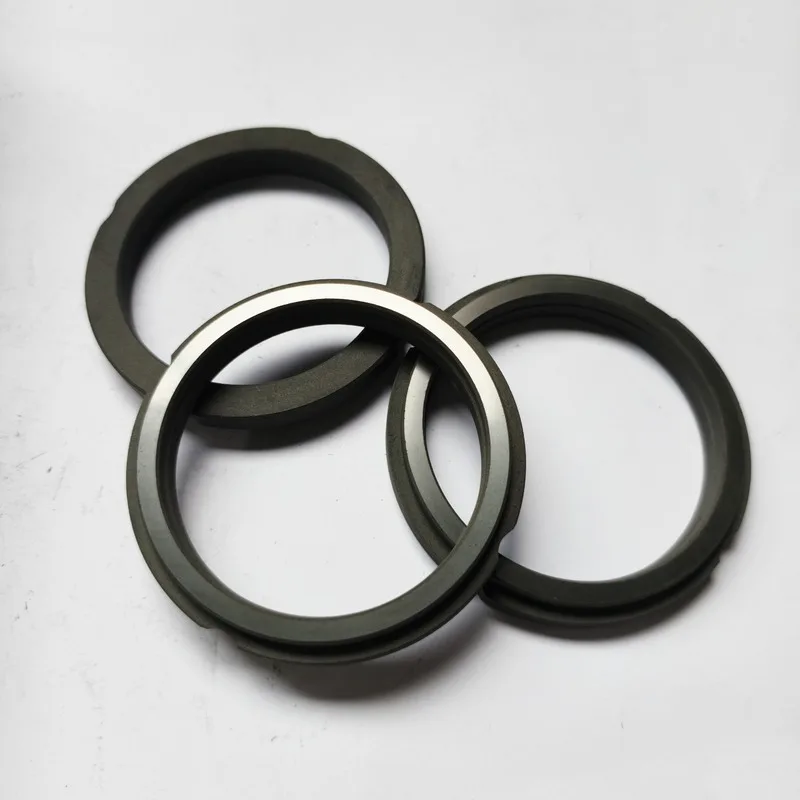
Высокотемпературное углерод-графитовое уплотнительное кольцо для требовательного вращающегося оборудования.
View details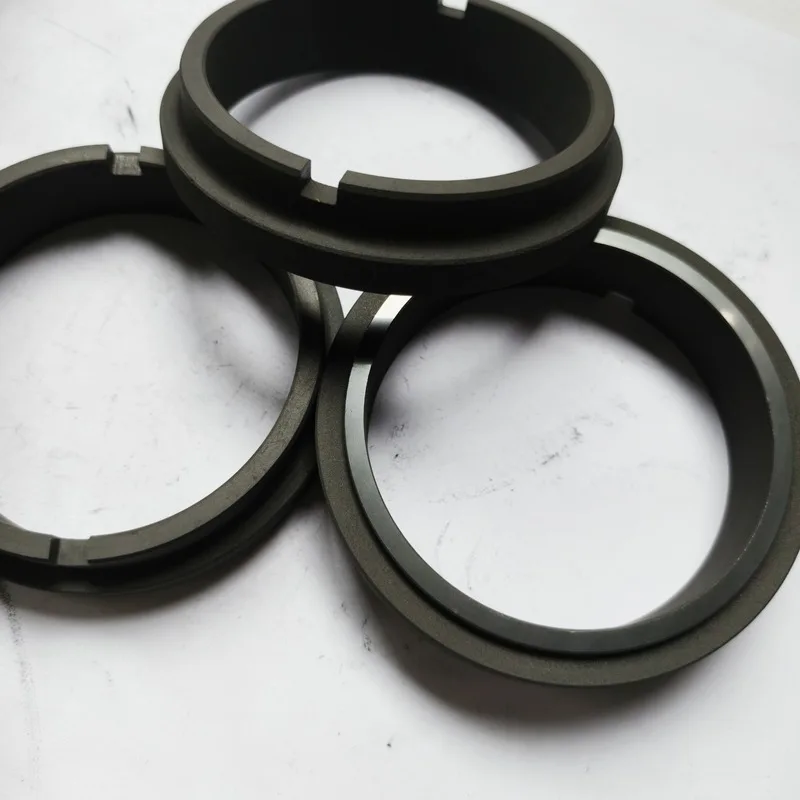
Компактное углерод-графитовое уплотнительное кольцо для установки в стесненных условиях.
View details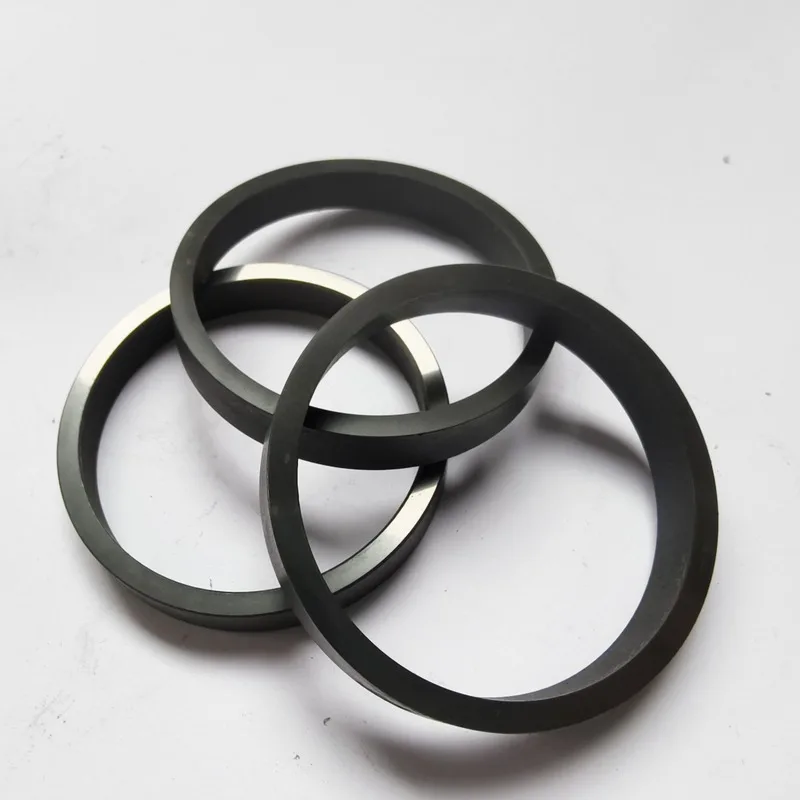
Универсальное углерод-графитовое уплотнительное кольцо для центробежных насосов с чистыми жидкостями.
View details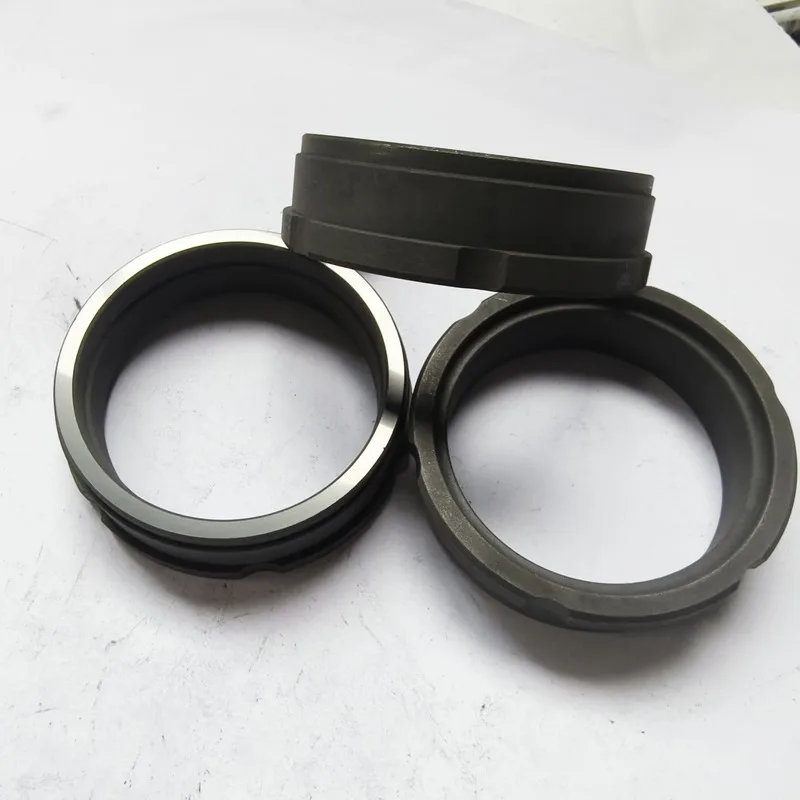
Небалансное углерод-графитовое уплотнительное кольцо для низкого-среднего давления.
View details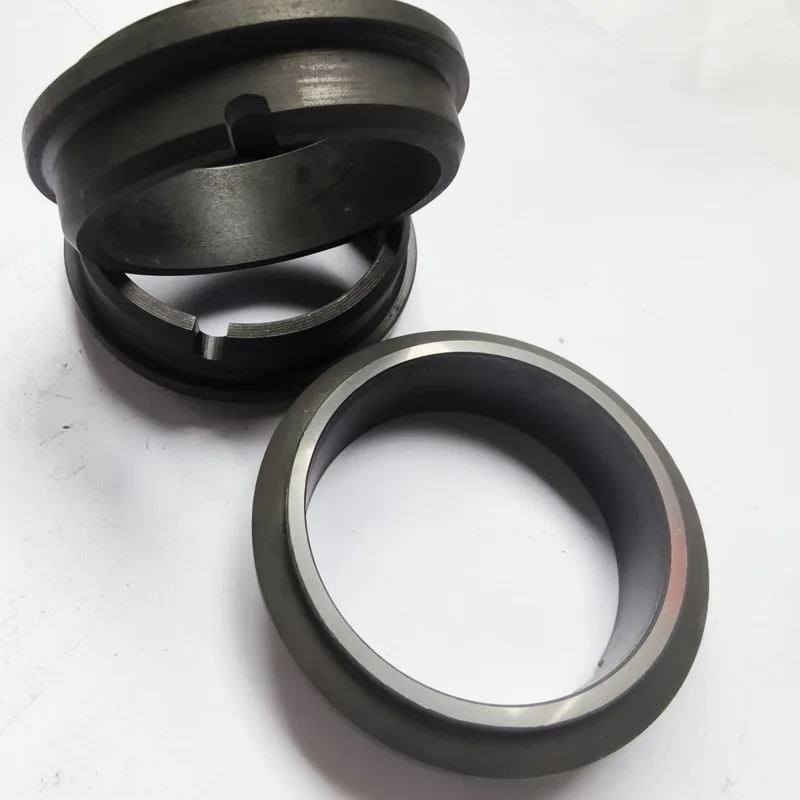
Химическое углерод-графитовое уплотнительное кольцо, коррозионностойкая многопружинная конструкция.
View details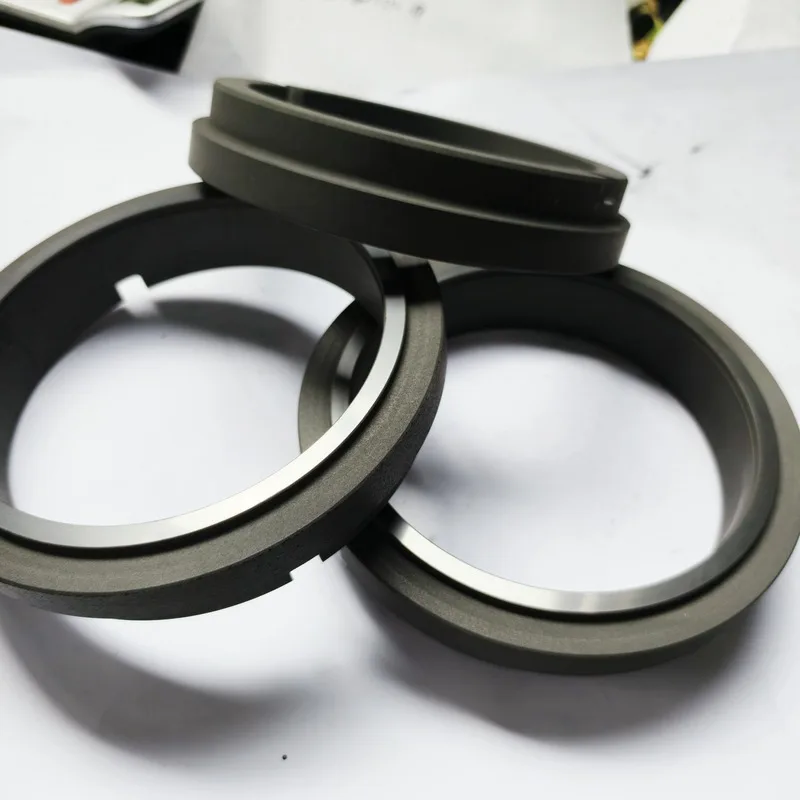
Двухторцевое углерод-графитовое уплотнительное кольцо для опасных сред.
View details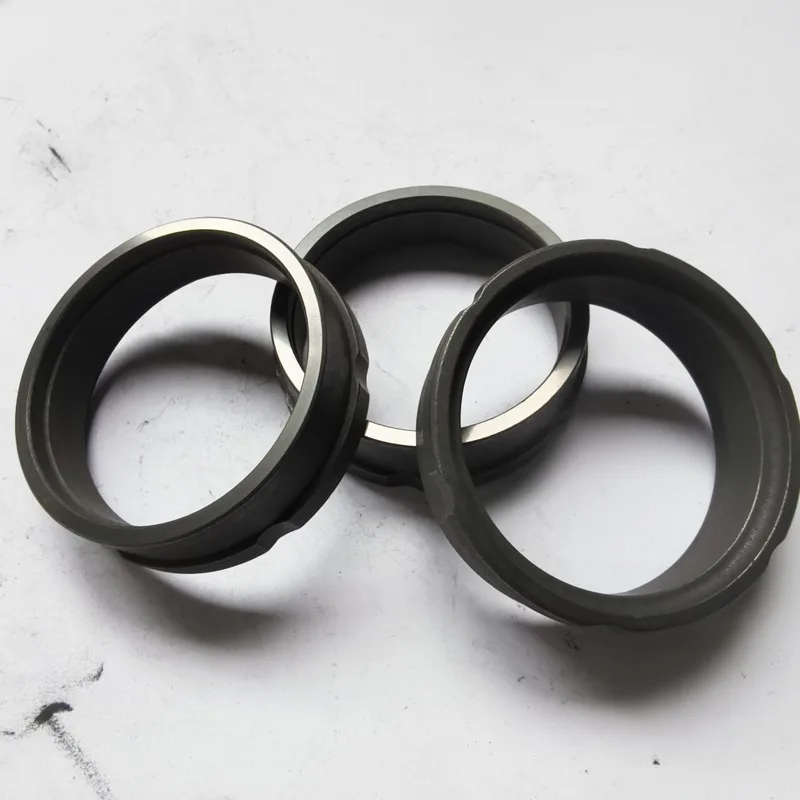
Встраиваемое углерод-графитовое уплотнительное кольцо для судовых насосов и насосов морской воды.
View details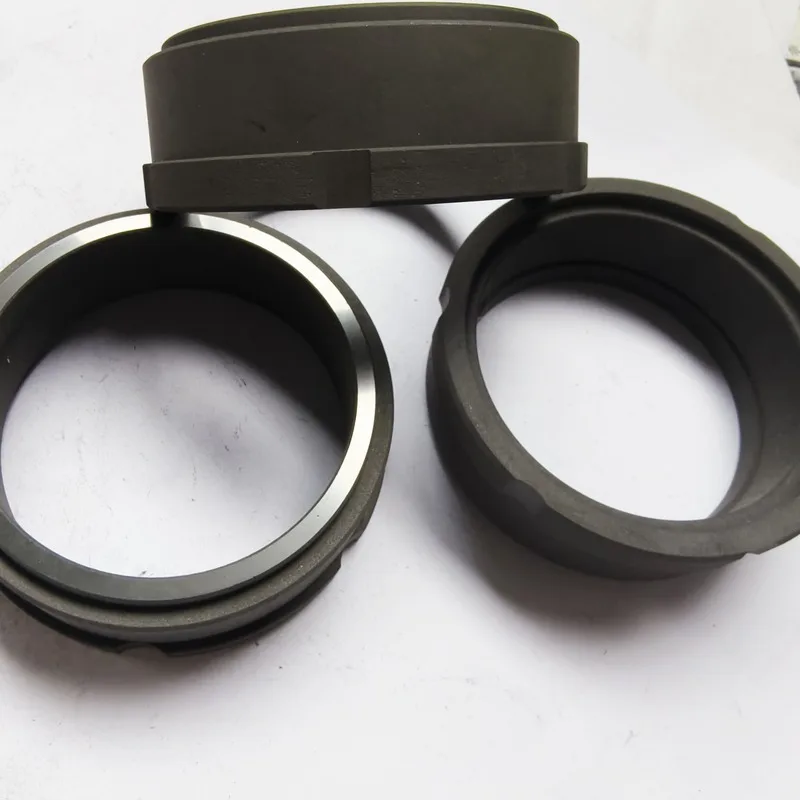
Балансное углерод-графитовое уплотнительное кольцо для среднего-высокого давления.
View details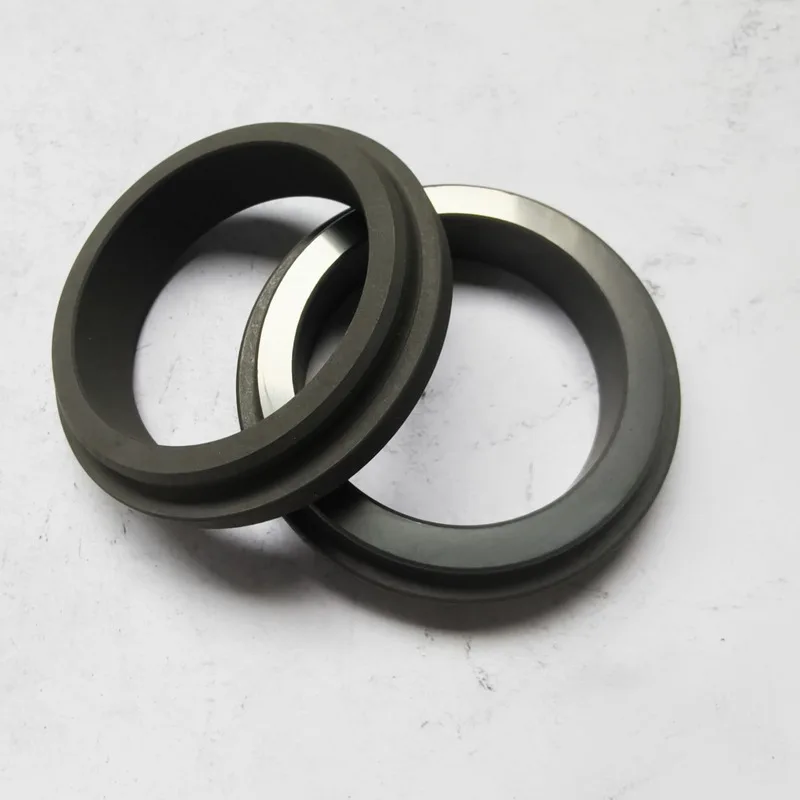
G6 interchangeable seal ring.
View details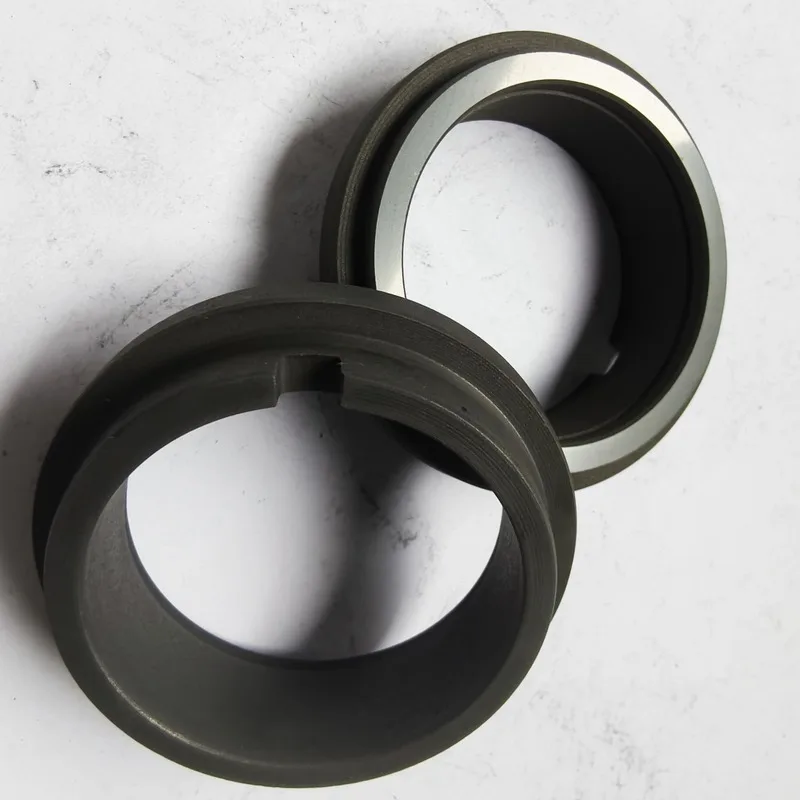
F-type compact seal ring.
View details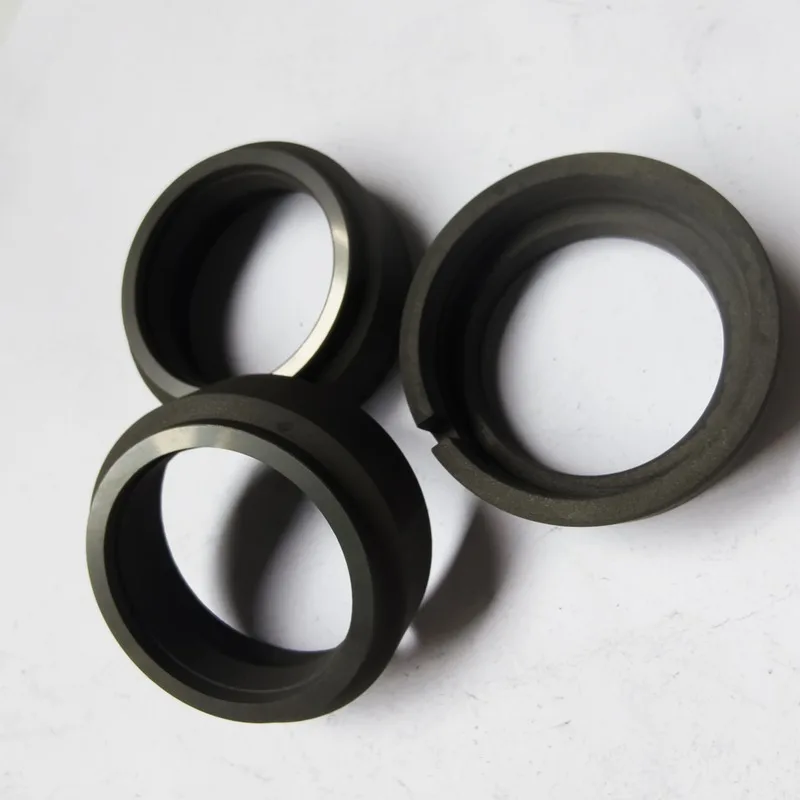
Multi-spring seal ring.
View details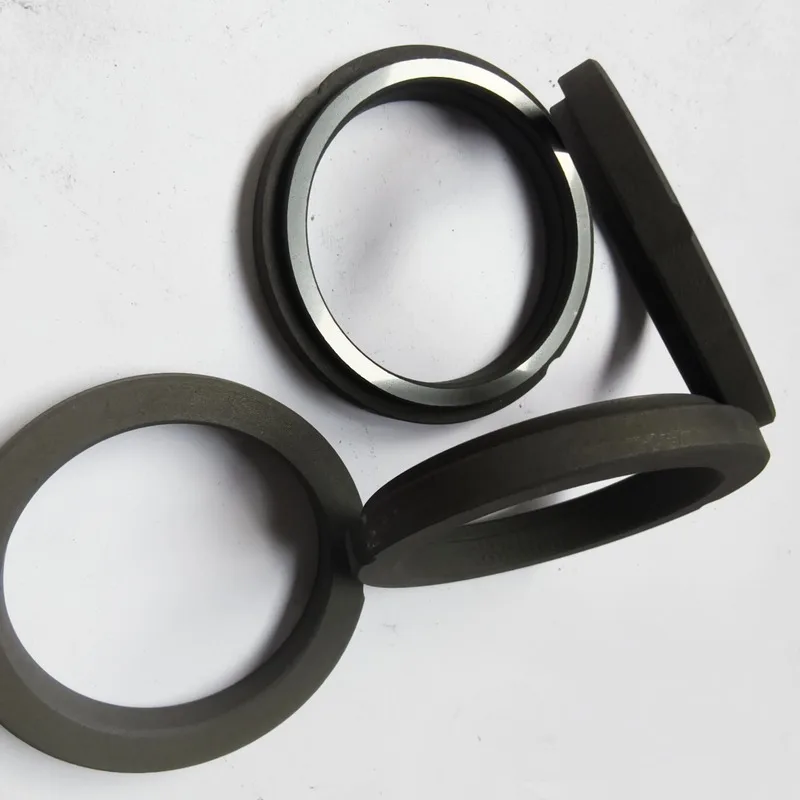
FBD specialized seal ring.
View details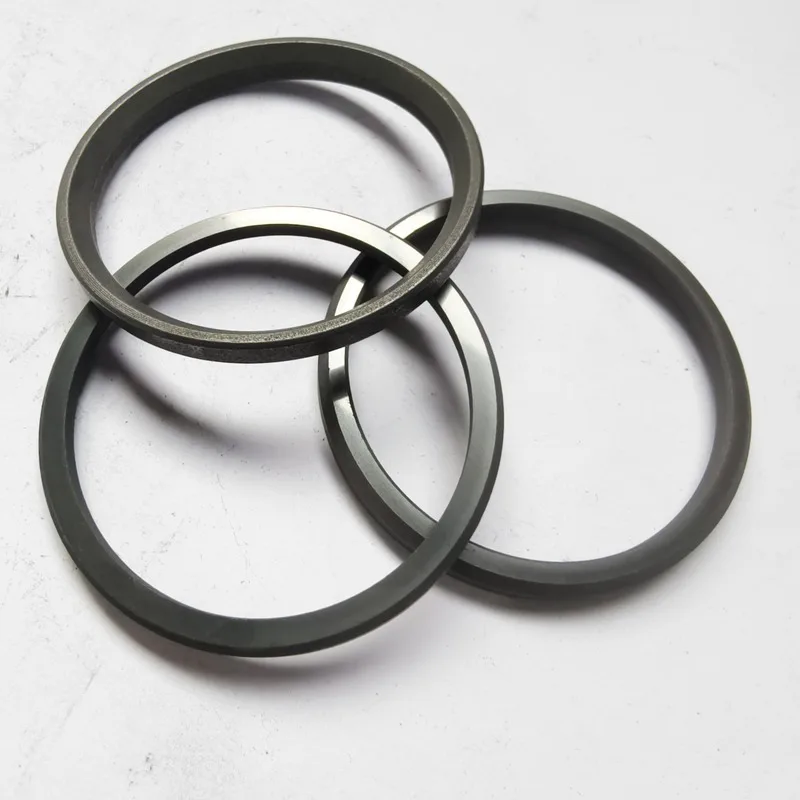
Medium-duty seal ring.
View details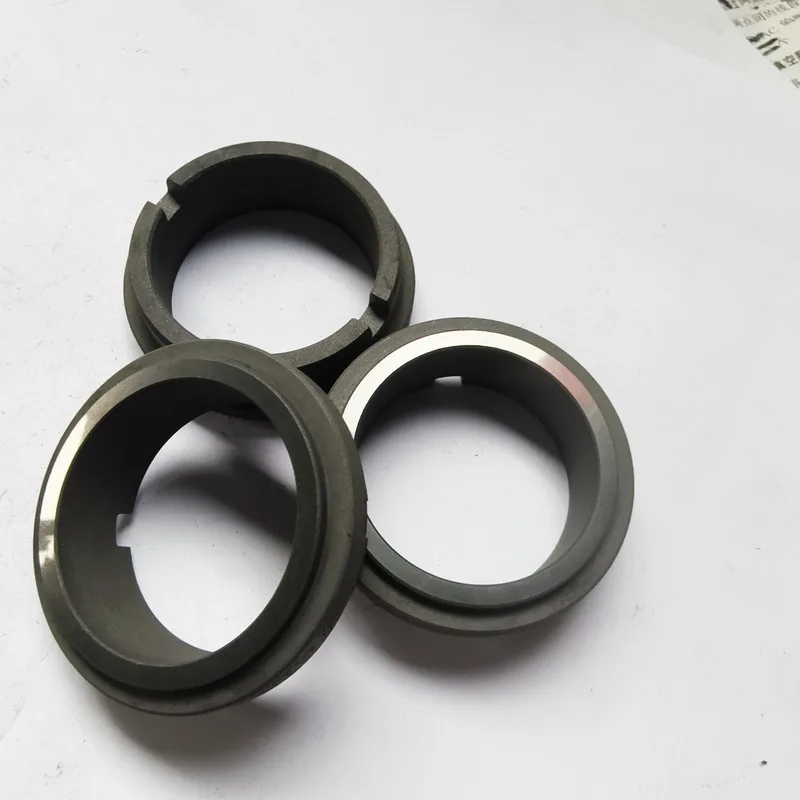
1527 interchangeable seal ring.
View details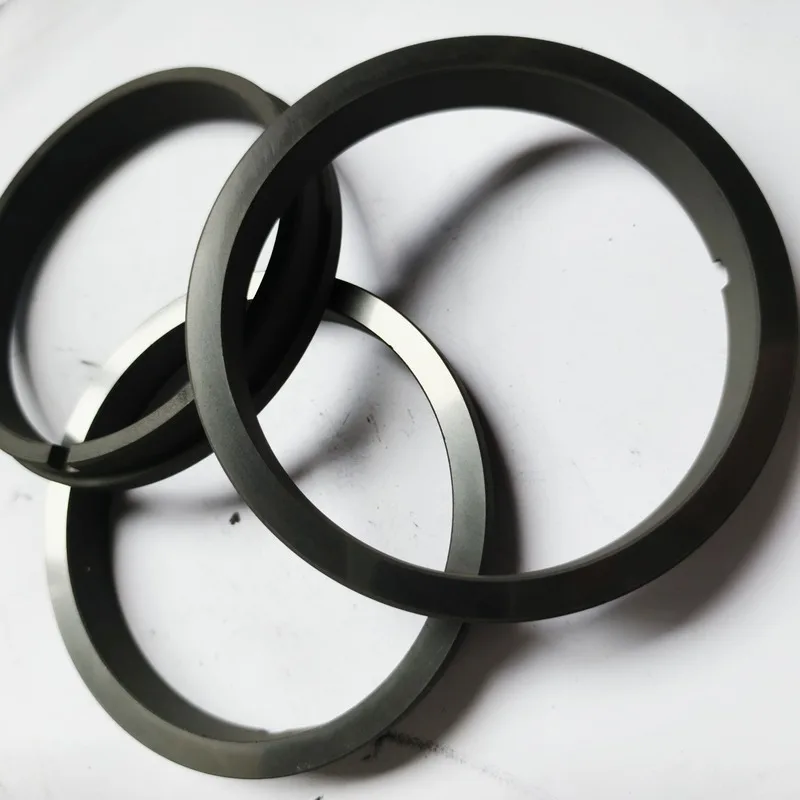
US general-purpose seal ring.
View details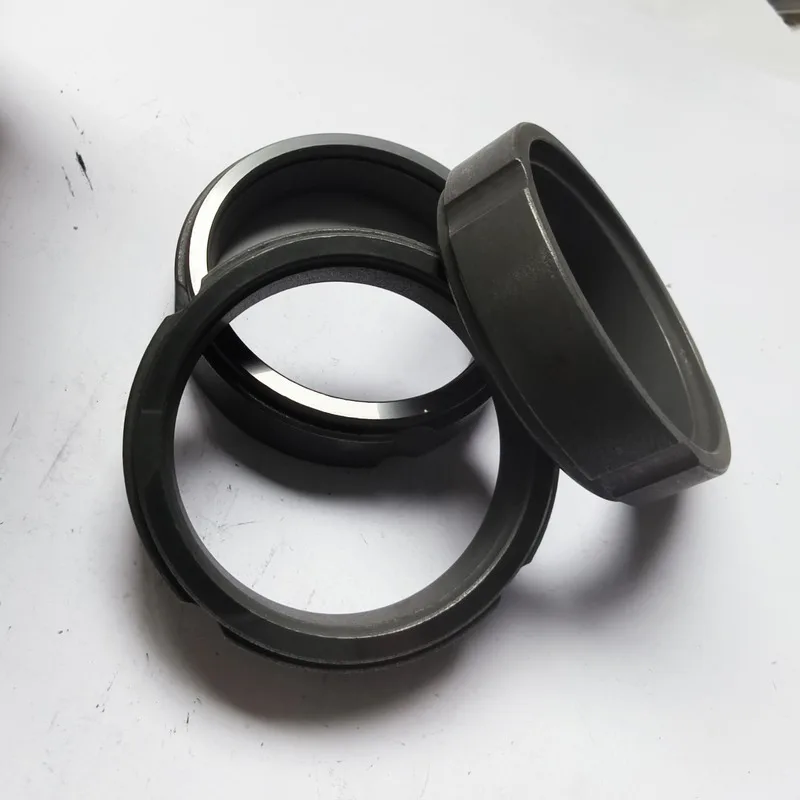
527 standard seal ring.
View details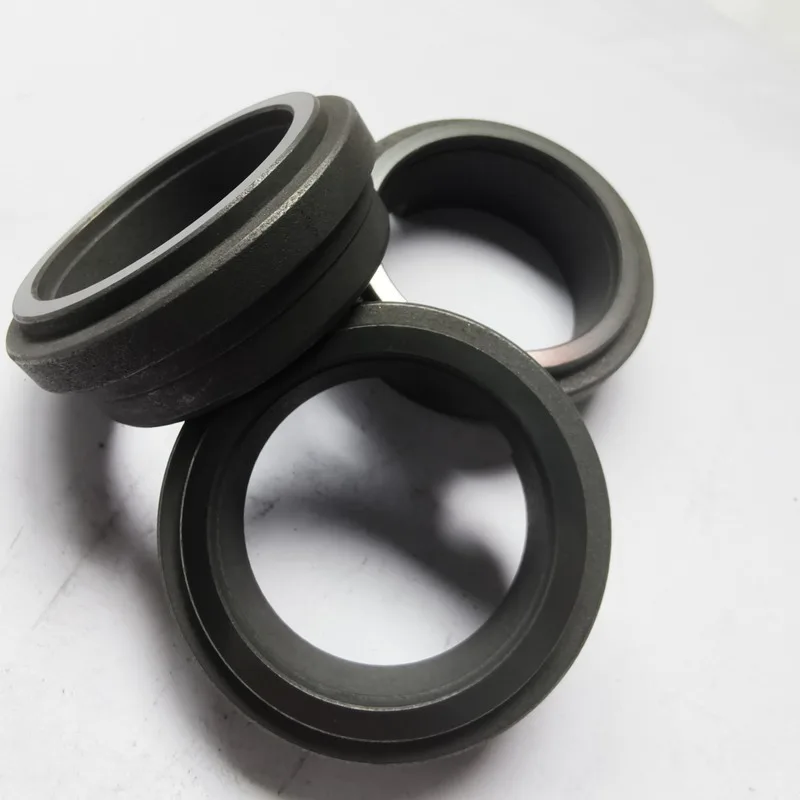
High-pressure press seal ring.
View details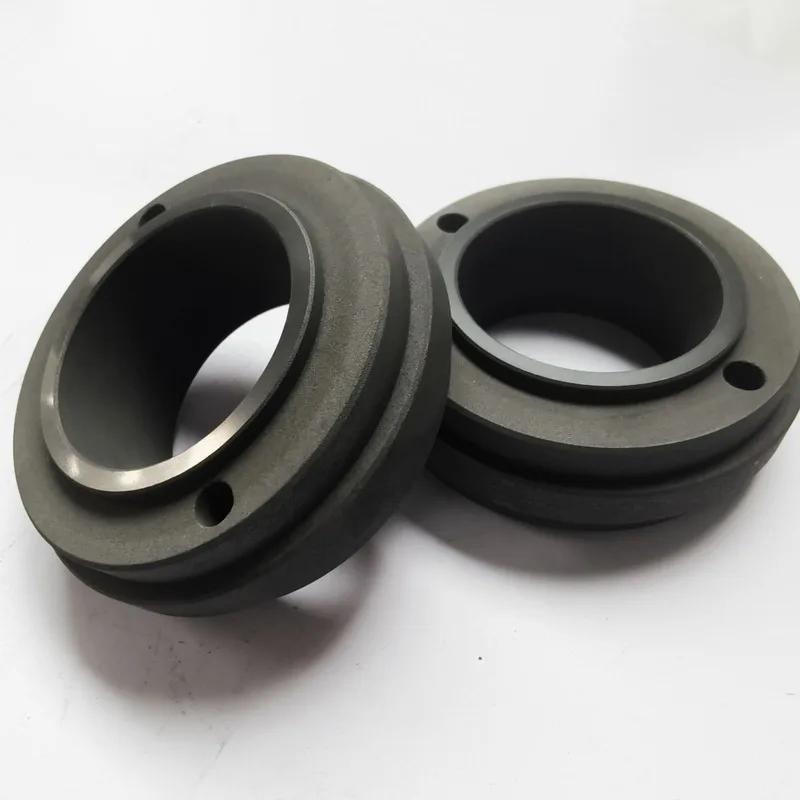
Dyeing machine seal ring.
View details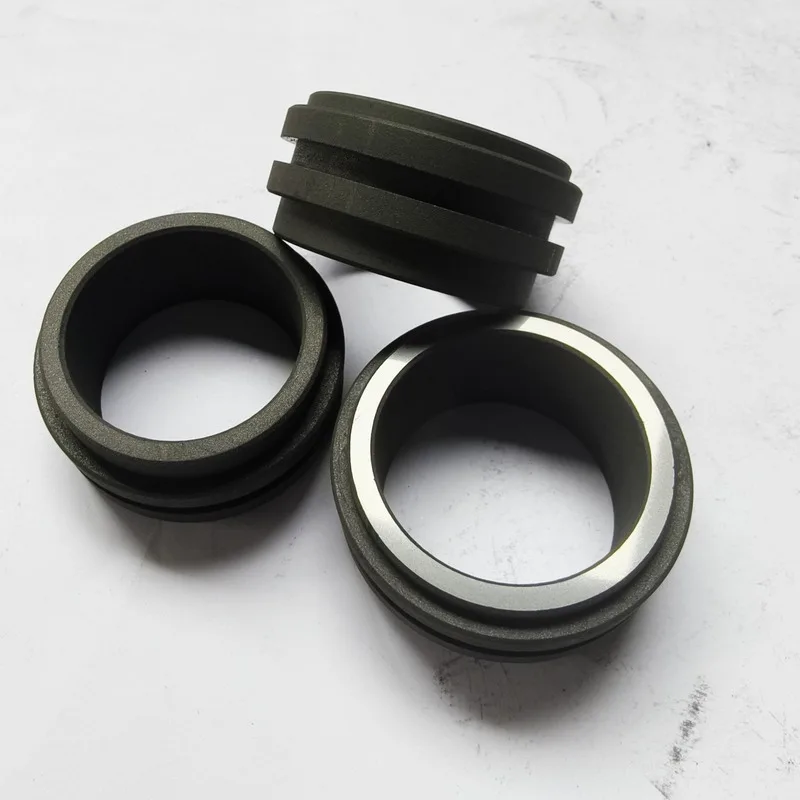
Double mechanical seal for oil pumps.
View detailsFour are standard: silicon carbide (SiC) is the general-purpose choice with high hardness and conductivity and good resistance to particle erosion; tungsten carbide (WC) is tougher and suits vibration and shock; alumina ceramic is the low-cost option for mild media and low speed; high-chrome stainless is reserved for light, slow duty. Tell us the mating material and coating and we select the carbon graphite grade around it.
Start with temperature and media. Resin impregnation (M106K) seals the pores for food and pharma oil-free duty at about 220°C continuous; furan-impregnated material has Tg 260-300°C, Td5 340°C and 65% char yield at 700°C, making it the upgrade where dry starts are credible; antimony impregnation (M106D) is rated 500°C and only oxidises noticeably at 600-650°C, used for refining hot oil pumps; carbonized (M191T) reaches 600°C with the highest chemical inertness.
Four. (1) Thermal: dry running pushes PV past the 0.8-1.2 MPa·m/s limit, the face crosses resin Tg, friction jumps from 0.08 to 0.22 and the impregnation layer shears off the matrix. (2) Abrasive wear: above 50 mg/L solids in the media, life drops 60-80%, showing as even bore enlargement and surface roughening — a magnetic filter restores life to over 85% of original. (3) Thermal cracking: rapid temperature change puts radial cracks in the face and it leaks. (4) Chemical attack: the wrong resin type is swollen or eaten by the media. The first two dominate real field failures and both trace back to lost liquid film or dirty media.
Yes. Drawings and physical samples are both accepted, including non-standard dimensions, grooving, drilling, chamfering and face lapping, machined on CNC to micron-level tolerance. Standard stocked items ship directly; non-standard parts are quoted by quantity and complexity. If you only have a sample, we measure it and send back a drawing for your approval first.
Send shaft diameter, speed, temperature, pressure and media — engineers reply with grade selection and quotation within 24 hours.